


vanessa charlot.
sanctuaries of the spirit
cohort. 2025-26
project. Sanctuaries of the Spirit: Black Churches in Mississippi
location. Mississippi
medium. photography

Mount Zion Baptist Church. Itta Bena, Mississippi (2026)
The road to many of Mississippi's Black churches is easy to miss.
Some sit beyond stretches of farmland where cotton once dictated the rhythm of life and death. Others emerge unexpectedly from neighborhoods shaped by migration, disinvestment, and resilience. A few stand along highways where thousands pass every day without knowing the histories contained within their walls. Their steeples rise above fields, pine forests, railroad tracks, and small towns. Their cemeteries hold generations of families whose names rarely appear in official archives, but whose labor, faith, and sacrifice helped shape the state itself.
Over the past year, I have traveled across Mississippi photographing Black churches. The journey carried me through the Delta, into the hills of North Mississippi, across central Mississippi, and eastward toward Meridian and Columbus. What began as a photographic project gradually became something else. The churches revealed themselves not merely as religious institutions but as historical records, repositories of memory, and living witnesses to Black life in the American South.
The buildings tell stories.
Some stories are visible. A weathered cornerstone marking a congregation's founding. Photographs of former pastors hanging in fellowship halls. Stained glass windows memorializing church mothers, deacons, and community leaders. Names etched into cemetery markers beneath cedar and oak trees.
Other stories are less easily located. They survive through repetition. Through testimony. Through songs sung for generations. Through anniversaries, homecomings, revivals, and funerals. They persist because someone continues to remember.
Mississippi has long occupied a complicated place within the American imagination. The state is frequently invoked through narratives of racial violence, political struggle, and poverty. Those histories matter. Yet they often overshadow another history equally central to understanding the region: the history of Black institution building. Across the state, Black communities created schools, businesses, newspapers, mutual aid societies, and churches that sustained life under conditions that frequently sought to deny Black people autonomy, dignity, and citizenship.
Among these institutions, the Black church occupies a singular position.
It has served as sanctuary and headquarters, classroom and refuge, gathering place and political forum. Long before many Black Mississippians could exercise meaningful political power, churches provided spaces where leadership could be cultivated, information shared, and collective futures imagined. During Reconstruction, Jim Crow, the Civil Rights Movement, and into the present, the church functioned as one of the few institutions fully governed by Black communities themselves.
Yet to speak only of politics would be to miss something essential.
The churches I encountered were also deeply spiritual places. Their significance cannot be understood solely through activism or historical importance. They are spaces where the visible and invisible converge. Places where ancestors remain present in memory and rituals. Places where grief and joy often occupy the same pew.
Raised in a Haitian household, I learned early that history is rarely confined to books. It lives in stories, gestures, songs, and traditions passed between generations. Spirituality was not separate from everyday life but woven into it. The boundary between memory and presence often felt porous. That understanding shaped the way I approached these churches.
Repeatedly, I found myself drawn to the spaces surrounding the sanctuaries as much as the sanctuaries themselves.
The churchyards.
The cemeteries.
The fellowship halls.
The vacant lots where former buildings once stood.
At Mount Zion in Itta Bena, history seemed embedded in the landscape itself. The church exists within a region where the legacies of slavery, sharecropping, migration, and resistance remain visible in both geography and memory. Standing there, it became difficult to separate the church from the larger history of the Delta. The sanctuary, cemetery, surrounding fields, and nearby roads all appeared connected through a shared historical narrative.
A similar feeling emerged at Little Zion Missionary Baptist Church. Popular memory often associates the area with Robert Johnson and the mythology surrounding the blues. Yet spending time there complicated familiar narratives. The sacred and secular traditions of the Mississippi Delta have never existed in isolation from one another. Spirituals, gospel music, blues traditions, and church culture emerged from many of the same historical conditions. Each reflects different attempts to navigate suffering, longing, survival, and hope.

near Money in Leflore County, Mississippi (2026)
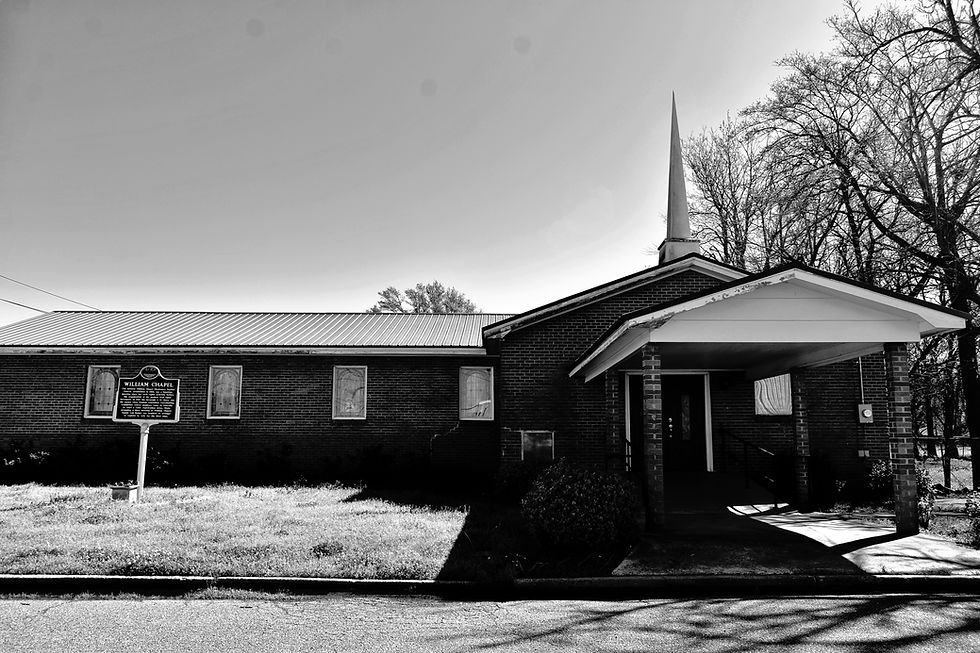
Ruleville, Mississippi (2026)
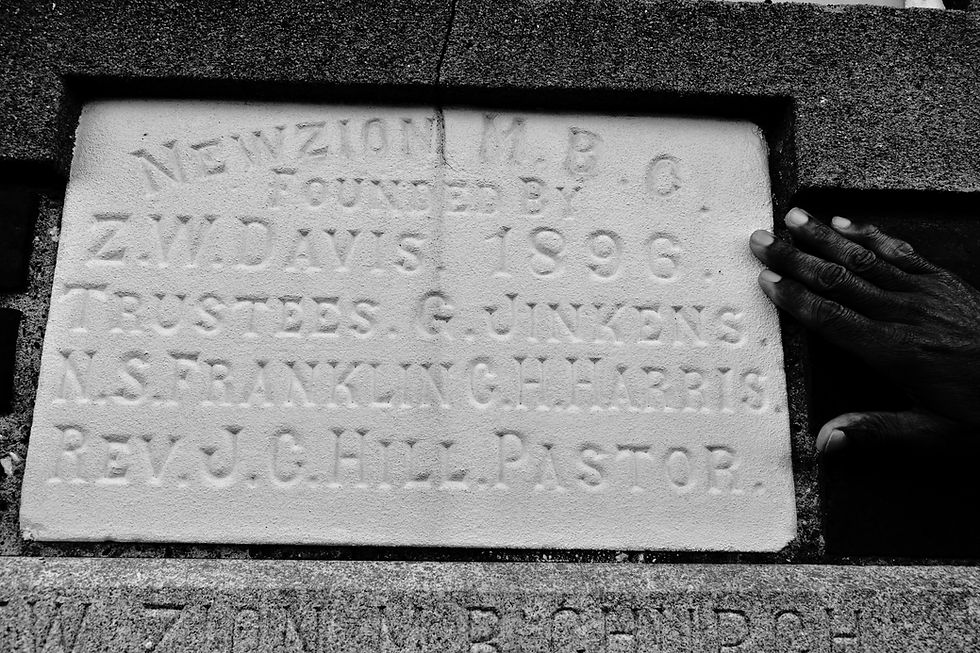
rests on the cornerstone of New Zion Missionary Baptist Church in Greenwood, Mississippi (2026)
In Ruleville, the legacy of Fannie Lou Hamer remains deeply present. The church cannot be separated from the political movements that transformed Mississippi and the nation. For many Black Mississippians, faith and activism have never been opposing forces. The language of liberation often emerged through religious traditions that emphasized dignity, justice, and collective responsibility.
At Mount Helm in Jackson, one encounters a congregation whose history parallels many of the state's most significant social and political transformations. In Greenwood, Columbus, Meridian, Clarksdale, Batesville, and Oxford, other stories surfaced. Some churches flourished. Others struggled to maintain aging buildings and shrinking memberships. Yet each revealed how deeply these institutions remain connected to community life.
One of the most striking aspects of this journey involved the cemeteries.

is a historic African American cemetery in Ruleville, Mississippi (2026)

in Philadelphia, MS, serves as a symbol of the struggle for voting rights and racial justice during Freedom Summer. The murders of Chaney, Goodman, and Schwerner became a turning point in the Civil Rights Movement, helping galvanize national support for the passage of the Voting Rights Act of 1965. (2026)
Many of Mississippi's Black churches exist in close relationship with burial grounds. Sometimes the graves stretch across rolling landscapes shaded by century-old trees. Sometimes they occupy modest patches of land immediately beside the sanctuary. In nearly every instance, they provide a visual reminder that these churches are not simply places people attend. They are places through which generations have passed.
Walking among the graves, certain names appeared repeatedly. Families whose histories extended across decades. Community leaders. Veterans. Church mothers. Children whose lives were heartbreakingly brief. The cemetery transformed abstract history into something tangible.
These burial grounds function as archives.
Not official archives, cataloged and climate-controlled, but community archives maintained through care, memory, and ritual. They preserve relationships. They reveal continuity. They remind visitors that the church's history cannot be separated from the people who built, sustained, and inhabited it.
Photography became a way of engaging these histories.

sits on his mother's lap, Mona May Kuykendall-Miles, alongside his brother, Vernon Miles, with bullet holes in the walls after the Ku Klux Klan shot at his family home because his father was helping Black Batesville residents to register to vote. Mile’s mother later suffered mental health ailments due to the ongoing racial terror and violence. Batesville, Mississippi.

holds a photograph of his father Robert James Miles Sr. Batesville, Mississippi (2026)
Documentary photography is often associated with evidence. Yet the longer I worked on this project, the more interested I became in absence, memory, and atmosphere. How does a photograph communicate what remains after a generation has passed? How might an image suggest histories that cannot be fully seen?
Many of the photographs in this project emerged from those questions.
Light entering through stained glass.
A worn hymnal resting in a pew.
A pulpit waiting between services.
The shadow of a steeple falling across a cemetery.
These moments may appear ordinary, yet they carry the weight of accumulated experience. They reveal how history settles into physical spaces.
The photographs also document a moment of transition. Across Mississippi and throughout the South, many historic Black churches confront uncertain futures. Congregations navigate demographic change, economic pressures, aging membership, and questions about preservation. Buildings that once served hundreds now struggle to maintain basic repairs. Oral histories risk disappearing as elders pass away.

which has closed down in Clarksdale, Mississippi (2026)

Jackson, Mississippi (2026)

Columbus, Mississippi (2026)
The urgency of this project therefore extends beyond documentation.
What is at stake is not simply the preservation of architecture, but the preservation of memory.
The churches represented here contain histories that challenge simplistic narratives about the South. They testify to the creativity, faith, and institutional vision of Black communities that built enduring spaces under extraordinary circumstances. They reveal traditions of care, leadership, and collective responsibility that continue to shape community life today.
More importantly, they remind us that history does not exist only in museums, archives, and monuments. It lives in places where people gather. It survives through practice. It remains present in buildings that continue to serve communities generation after generation.
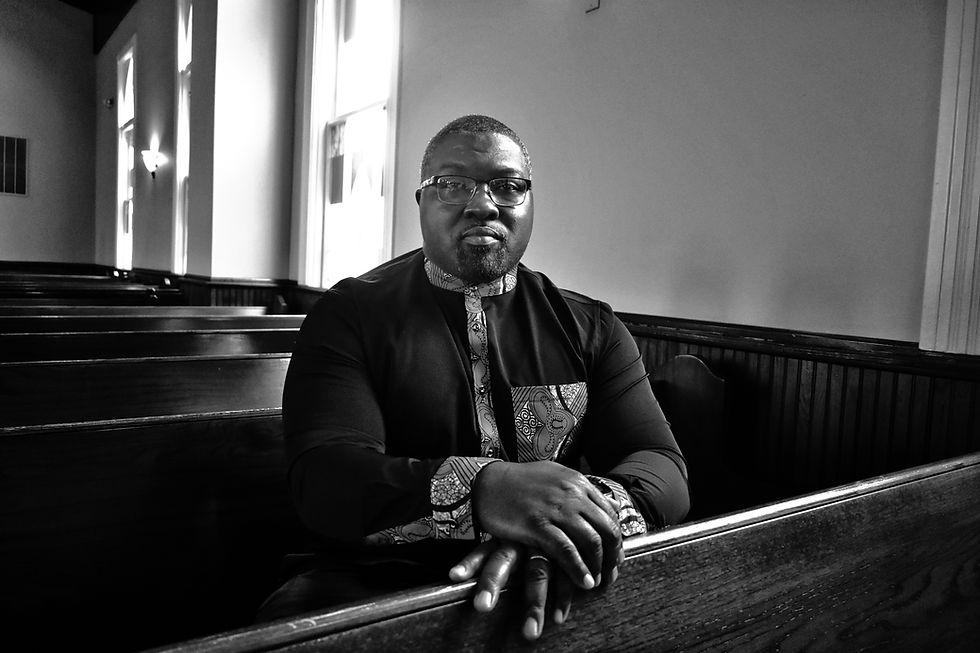
pastor of Missionary Union Baptist Church, the oldest African American church in Northeast Mississippi, established in 1833. Columbus, MS (2026)

preached to the Philadelphia Missionary Baptist Church congregation. Oxford, Mississippi (2026)

of Philadelphia Missionary Baptist Church Oxford, Mississippi (2026)
This project is an invitation to spend time with those places.
To consider what they hold.
To think about what they have witnessed.
And to recognize how much of Mississippi's story remains written within their walls.
press.
Missionary Union helps tell the story of Black churches in Mississippi
The Dispatch (11 March 2026)
From generations of spiritual leaders and community builders to countless congregants, the walls of Missionary Union Baptist Church hold more than a century of history.
Now the church is set to be a face of a statewide project aimed at photographing and documenting historic Black churches in Mississippi.
cite this project.
Projects featured on this site are the intellectual property of the Fellows who created them and may not be reproduced without their permission.
Please cite the creator if you use their work in support of your own.
Citation: Charlot, Vanessa. “Sanctuaries of the Spirit: Black Churches in Mississippi." SPIRIT HOUSE: A Crossroads Project. July 2026. Date Accessed. https://www.crossroads-spirithouse.org/charlot

Vanessa Charlot is an award-winning photographic artist, professor, and filmmaker based in Mississippi. Her work integrates documentary photography, filmmaking, and interdisciplinary research to examine the intersection of race, politics, culture, and gender. Grounded in Saidiya Hartman’s concept of “critical fabulation,” Charlot weaves history, memory, and imagination to challenge distorted narratives surrounding Black life. Her practice disrupts conventional notions of objectivity in visual storytelling, reclaiming and reframing histories through intimate yet socially resonant imagery.
_edited.jpg)